
A Hundred Year Eulogy for Sergey Yesenin
"On loving men in a country that only forgives you once you're dead"

M Sebastian Araujo Esq. 3.16.2026
THEY say that on the night between December 27 and 28, 1925, in a room at the Hotel Angleterre in Leningrad, a golden-haired boy who’d grown into a haunted man took his own life at thirty years old. What the history books leave out is that Sergey Yesenin had been dying for years before that night. Dying the way a star dies, burning itself hollow from the inside out, collapsing under the weight of its own impossible light…By M. Sebastian Araujo | The Magpie Chronicles The Magpie Chronicles — subscribe if you're staying.
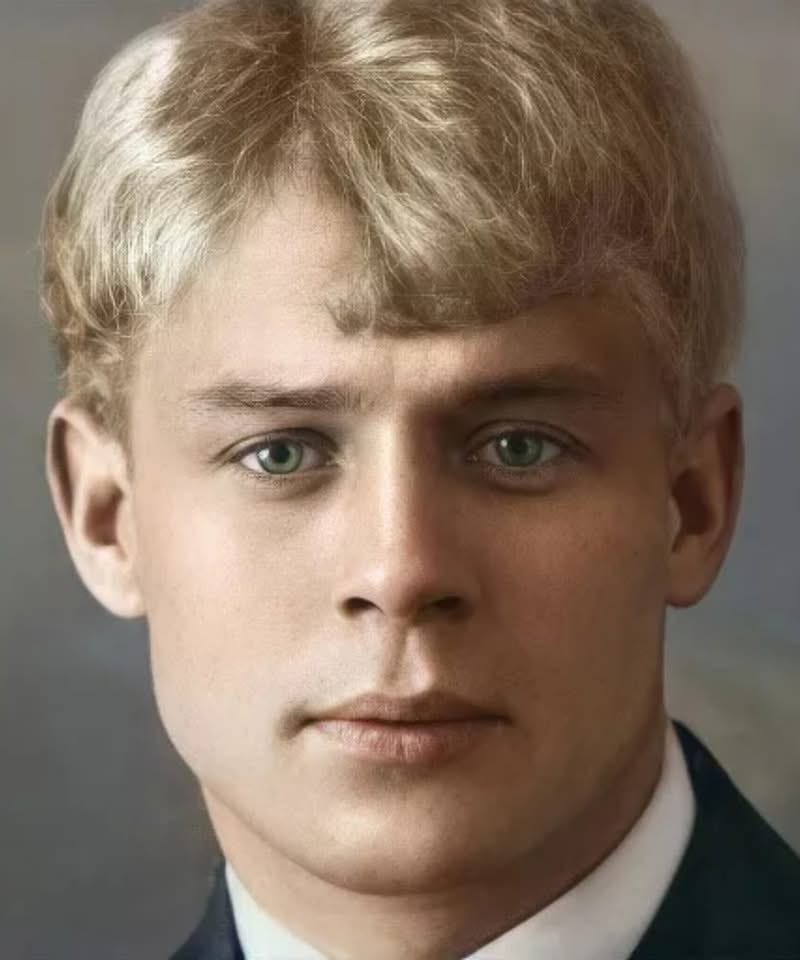
“Я последний поэт деревни” — I am the last poet of the village — he wrote, as if he knew even then that he was witnessing the death of something holy.
HE was born to nothing in Konstantinovo, a peasant village where the birch trees bent like penitents and the fields stretched out so far they could swallow a man’s ambitions whole. His poetry came from some deep well in the Russian soul, vivid as blood on snow, honest as a confession whispered in the dark. The words poured out of him—birch trees and wide fields, and also the ache of belonging nowhere, of being too much for the world and not enough for yourself…
.
Fame found him young, the way it finds all the doomed ones.
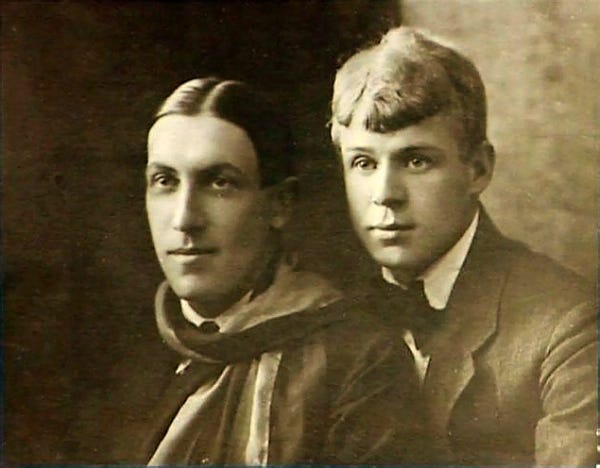
In 1915, at twenty, he moved to Petrograd and met Nikolai Klyuev, an older poet who became his mentor, his lover, and the first person to truly see him. They lived together for two years. Klyuev wrote about the blond angel-boy who’d walked into his life; Yesenin wrote poems to Klyuev that burned with a devotion the official biographies would later try to erase.
The Russian intelligentsia whispered about him in their salons: “He writes like an angel and drinks like a demon.” They also whispered about the men he loved—Klyuev, then Anatoly Marienhof with whom he cohabited for four years. Russia, then and now, prefers its golden poets to be heterosexual heroes.
YESENIN moved through the world loving whoever he loved—men and women both—with the same consuming intensity he brought to his poetry. He married five times—Anna Izryadnova, Zinaida Raikh, Isadora Duncan, Sophia Tolstaya, Galina Benislavskaya. Fathered children. Had affairs that scandalized Moscow. Proposed marriage like other men ordered drinks. His longest, most enduring relationships, though, were with men. With Marienhof, he founded the Imaginist movement, shared rooms, dedicated poems, built a life in the chaotic years after the revolution.
“Why do you marry so many women?” a friend once asked. Yesenin laughed that bitter laugh of his. “I’m trying to become someone I’m not. It never works.”
AND then came 1921, and Isadora Duncan.
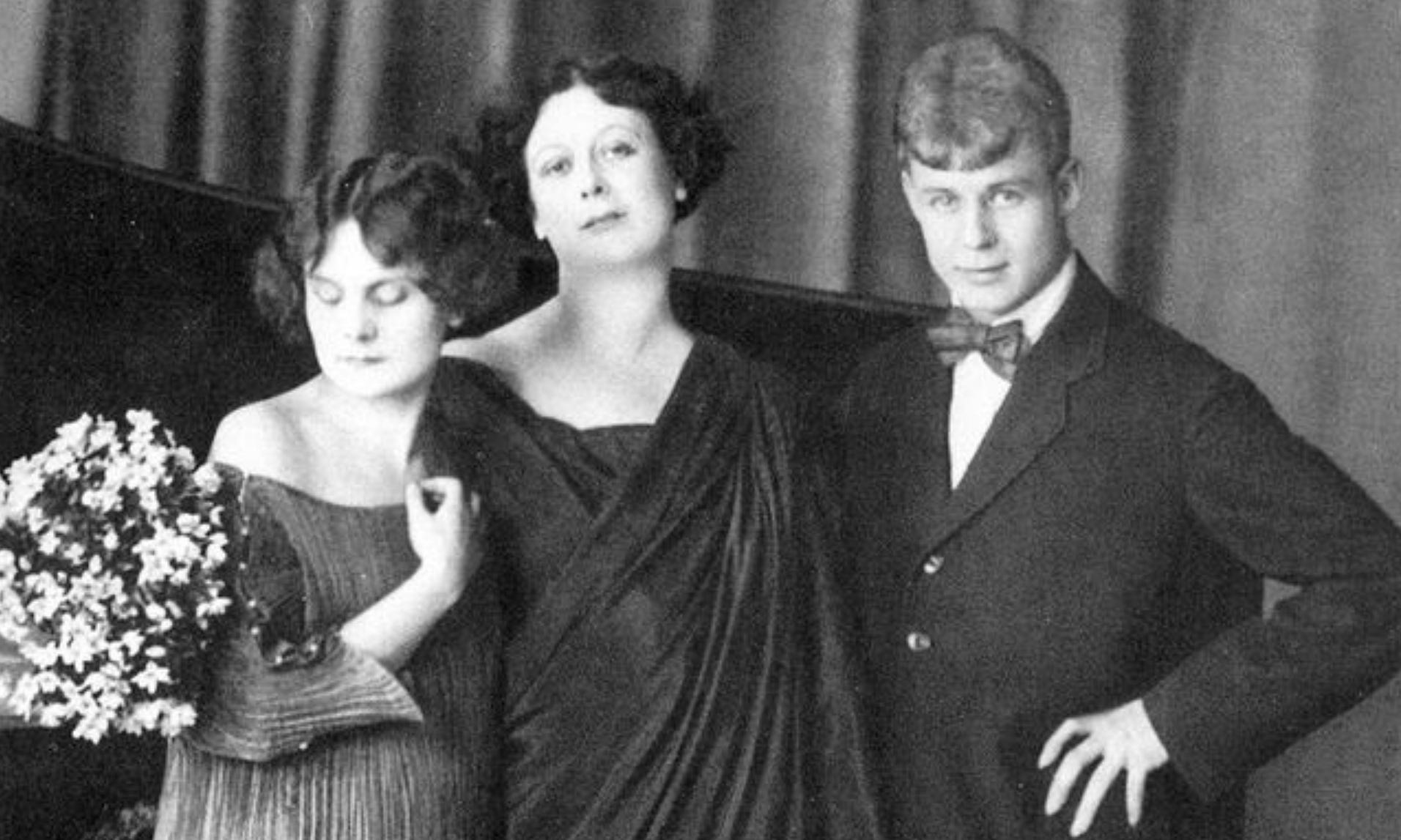
She was already famous when they met in post-revolutionary Moscow—an American dancer whose name meant freedom and scandal. He was younger by years, speaking a different tongue, but they recognized something in each other that needed no translation. Perhaps it was the understanding of two people who’d made art their religion and found it a jealous god.
“Isadora! Isadora!” he would shout, one of the few words they shared. She called him “Sergei, my angel.” They spoke in gestures, in passion, in the universal language of beautiful people destroying each other.
THEIR marriage in 1922 was less a wedding than a pact signed in desperation, two drowning people clutching at each other in the middle of an ocean. They toured Europe and America together, and that’s where the poison really set in. Isadora’s fame cast a shadow so large he disappeared inside it. Far from the Russian soil that fed his poetry, he became a ghost at his own life. The alcohol that had always been his companion turned cruel.
Я хулиган, я бандит, я вор,
Я мечтатель и буян.
I’m a hooligan, I’m a bandit, I’m a thief,
I’m a dreamer and a brawler….
ISADORA fought for him, God knows she fought. You can’t anchor a man who’s already decided to drown. By 1923, he fled back to Russia. The fleeing never stopped after that.
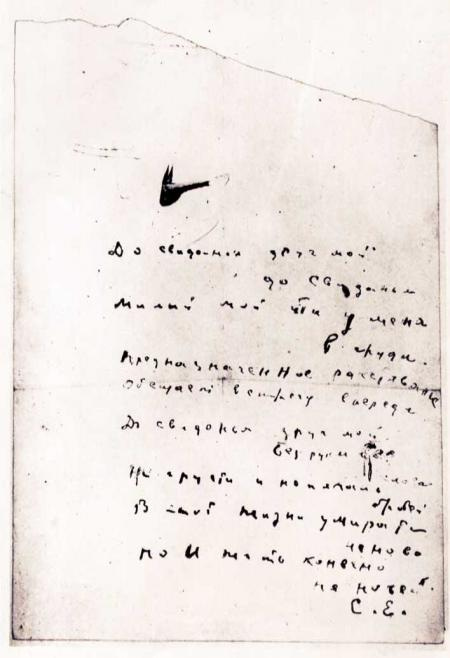
IN that cold hotel room in Leningrad, when he’d run out of places to run, he cut his wrist and wrote his final poem in his own blood. He addressed it to Wolf Ehrlich, a young Jewish poet with whom he’d spent the night before—though the official story would later claim it was for a woman named Elizaveta, because Russia needed its golden poet to die heterosexual.
До свиданья, друг мой, до свиданья,
Милый мой, ты у меня в груди.
Предназначенное расставанье
Обещает встречу впереди.
Goodbye, my friend, goodbye,
My love, you’re in my heart.
It was preordained we should part
And later meet again, high in the sky.
AND then the last lines, the ones that break your heart because they’re tired, so finished:
В этой жизни умирать не ново,
Но и жить, конечно, не новей.
In this life, to die is nothing new,
But to live, of course, is not any newer.
TWO years later, Isadora Duncan’s scarf caught in the wheel of a car and strangled her. The universe has a taste for irony that would make even the devil wince.
The Afterlife of Dead Poets
A hundred years have passed since that December night. A hundred years since the golden-haired boy-poet bled himself empty in a Leningrad hotel. And still his words burn with that same impossible brightness, still they speak to anyone who’s ever felt too much, loved too hard, lived at a pitch that makes ordinary life unbearable.
Russians have always loved their poets best when they’re dead. Pushkin, Lermontov, Mayakovsky, Tsvetaeva—the list reads like a roll call of beautiful ghosts. And if you loved the wrong people? Russia will clean that up for you posthumously. They’ll rewrite your love letters, reassign your final poems, make you respectable in death the way you never were in life.
SERGEY Yesenin was consumed by passion—for Russia, for poetry, for Isadora, for the men who understood him in ways his wives never could, for the dark and the damp and the riot of his own wild heart. He lived in a country tearing itself apart, in a time when loving men could get you erased from history.
The official biographies will tell you about Isadora Duncan, about his peasant roots, about his tragic alcoholism. They’ll skip over Klyuev and Marienhof and Ehrlich. They’ll ignore that his most lasting relationships were with men, that his suicide note was addressed to a male lover, that the Russia he loved so fiercely loved him back only after they’d straightened him out, cleaned him up, made him safe for schoolchildren to memorize
.
HERE’S the thing about those flames—they don’t go out. A hundred years later, we’re still reading his words, still feeling the heat of that impossible burning. Still recognizing ourselves in his beautiful, terrible honesty.
HE once wrote: В этом мире можно найти всё, кроме любви и смерти. Они находят вас сами, когда приходит время. — In this world you can search for everything, except Love and death. They find you when the time comes.
THEY found Sergey Yesenin on December 28, 1925. His words—those riotous, broken, luminous words—found immortality. Isn’t that the cruelest joke of all? The boy who felt he had no place in the world left behind a legacy that will outlive us all.
Today, in Russia, they visit his grave in Vagankovo Cemetery. They leave flowers and vodka bottles. They recite his poems by heart. They love him now, wholly and completely, in the way they couldn’t when he was alive and messy and human. When I was in Russia the last time I too took a clutch of hothouse Parma Violets and laid them along with the others, the vodka for me waited till afterward in the local cafe…it was midwinter after all and knowning his life story I needed a few drinks before boarding the train back.
REST easy, golden-haired poet. You’re home now, wherever home is for souls that burned too bright. The birch trees remember you. The wide fields remember you. And every poet who’s ever felt too much—we remember you too.
До свиданья, друг мой, до свиданья.
Goodbye, my friend, goodbye.
Share this if you believe some souls are too bright for this world…If this stirred something in you — the good kind of stirring, the kind that smells like rain on hot pavement — come find me at The Magpie Chronicles. Subscribe here. The garden is always open.